The Death of Google’s Patents?

By John F. Duffy* [File Attachment (42 KB)]

            The Patent and Trademark Office has now made clear that its newly developed position on patentable subject matter will invalidate many and perhaps most software patents, including pioneering patent claims to such innovators as Google, Inc.

            In a series of cases including In re Nuijten, In re Comiskey and In re Bilski, the Patent and Trademark Office has argued in favor of imposing new restrictions on the scope of patentable subject matter set forth by Congress in § 101 of the Patent Act.  In the most recent of these three—the currently pending en banc Bilski appeal—the Office takes the position that process inventions generally are unpatentable unless they “result in a physical transformation of an article” or are “tied to a particular machine.”[1] Perhaps, the agency has conceded, some “new, unforeseen technology” might warrant an “exception” to this formalistic test, but in the agency’s view, no such technology has yet emerged so there is no reason currently to use a more inclusive standard.[2]  

            The Bilski en banc hearing attracted enormous attention, and yet there has remained a sense among many patent practitioners that the PTO’s attempts to curtail section 101 would affect only a few atypical patent claims.  The vast bulk of patents on software, business and information technology are thought by some not to be threatened because those innovations are typically implemented on a machine—namely, a computer—and the tie to a machine would provide security against the agency’s contractions of § 101.  Even if that view were right, the contraction of patent eligibility would be very troubling because the patent system is supposed to be designed to encourage the atypical, the unusual and the innovative.  But that view is wrong.

            The logic of the PTO’s positions in Nuijten, Comiskey and Bilski has always threatened to destabilize whole fields of patenting, most especially in the field of software patents.  If the PTO’s test is followed, the crucial question for the vitality of patents on computer implemented inventions is whether a general purpose computer qualifies as a “particular” machine within the meaning of the agency’s test.  In two recent decisions announced after the oral arguments in the Bilski case, Ex parte Langemyr (May 28, 2008) and Ex parte Wasynczuk (June 2, 2008),[3] the PTO Board of Patent Appeals and Interferences has now supplied an answer to that question: A general purpose computer is not a particular machine, and thus innovative software processes are unpatentable if they are tied only to a general purpose computer.  


To continue reading, become a Patently-O member. Already a member? Simply log in to access the full post.

Liveblogging from the Loyola Law Journal Conference on Patents, Innovation & Freedom to Use Ideas

By Jason Rantanen

Today I'll be liveblogging from the Loyola Law Journal Conference on Patents, Innovation & Freedom to Use Ideas. I'll be posting the full text of my entries below the break for those who are interested. Note that I don't necessarily agree with the views of all the speakers (some of whom are close to diametrically opposite).  Also, keep in mind that this is very rough blogging.  Don't expect elegant writing.

Keynote speaker: Dr. Richard Stallman.  Speaking about patents and software. 


To continue reading, become a Patently-O member. Already a member? Simply log in to access the full post.

Thompson v. Haight, 23 F.Cas. 1040 (S.D.N.Y. 1826)

The Thompson decision was released on January 1, 1826 and penned by Judge Van Ness who died later that year.  Van Ness was perhaps most famous for being Aaron Burr’s second at Burr’s duel with Alexander Hamilton, but this opinion shows further sign of his character.  Van Ness argues that the U.S. patent system at the time was being overrun by large numbers of trivial inventions. Although it required invention in name, it was really just becoming a replacement to monopolies barred by the Statute of Monopolies (1624). 

Van Ness further explains that the plethora of low quality patents harms the genuine inventors, because all patents are suspect.

It is unnecessary to look farther than to see the fate of Whitney, Evans, and above all, Fulton, or those who represent him. Instead of deriving peace, honour, and affluence from their incessant labour and incomparable skill, they have sunk under vexation and the pressure of litigation. Patent upon patent and privilege upon privilege have been granted, infringing the original rights, until their hopes and anticipated rewards were converted into despair and poverty. In the degrading conflict, even the laurels they had fairly won withered amidst the wreck of their fame and their fortunes.

Id. Van Ness called for a rigorous examination system and, once examined, patents should then be deemed secured:

They should only be granted, as I conceive, upon due examination into the merits of the application, and then the rights granted should be well secured, and well protected.

Id. 


To continue reading, become a Patently-O member. Already a member? Simply log in to access the full post.

Fraud on the Court: Finality and the Ghost of Hazel-Atlas

by Dennis Crouch

The Supreme Court will soon consider whether to hear an important case about fraud on the court (and the USPTO) and the judiciary's obligation to address it.  Marco Destin, Inc. v. Levy, Case No. 24-787. The issue now before the Court asks whether it was proper for the lower court to overlook fraud that affects the judicial process itself in favor of finality of judgment. [Marco Destin Petition]

Fraud cases are typically interesting reads, and this one fits the bill. In 1993, L&L Wings entered into a trademark license agreement with Shepard Morrow for the use of the "WINGS" mark in retail store services -- particularly for use on beach merchandise. L&L Wings made only the initial $10,000 royalty payment under the agreement, then defaulted on the remaining payments. Despite losing its rights to the mark, L&L Wings continued using the mark and even began sublicensing it to others, including Marco Destin (Alvin's Island) in 1998.
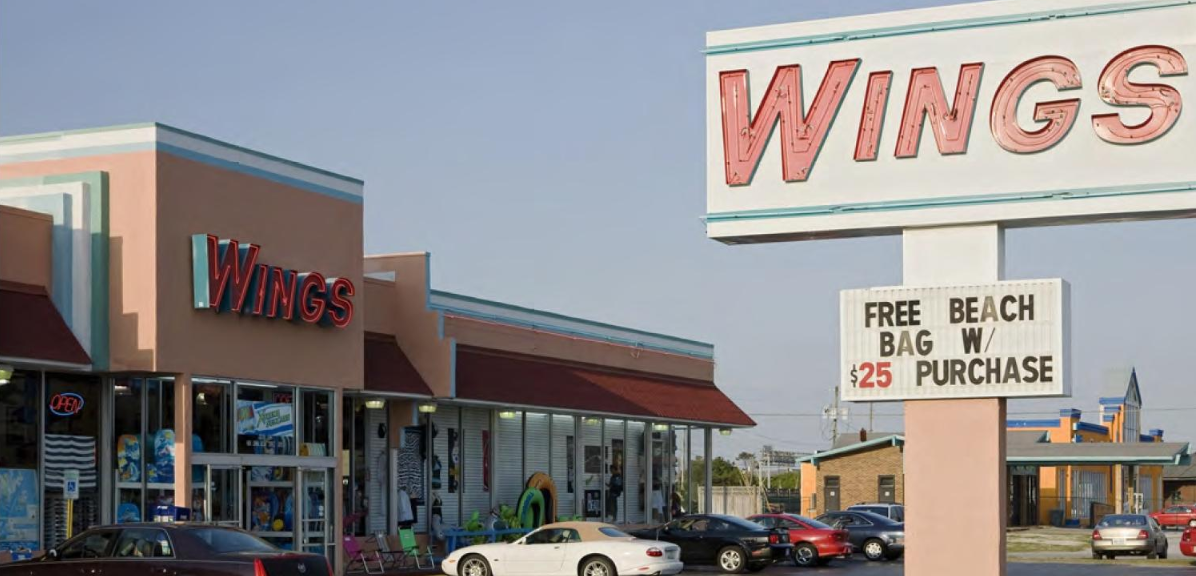
In 2007 L&L Wings (owned by respondents Shaul Levy and Meir Levy) sued Marco Destin for trademark infringement in the Southern District of New York. According to the cert petition, L&L's attorney Bennett Krasner knew at the time that L&L Wings had no rights to the mark, having personally negotiated the earlier failed licensing deal with Morrow. Yet the complaint omitted any mention of Morrow's ownership or L&L Wings' status as a former licensee.

During that litigation, Krasner allegedly deepened the deception by obtaining a federal trademark registration for "WINGS" through what the petition characterizes as fraudulent representations to the USPTO. The application claimed L&L Wings had been in "continuous high-profile use" of the mark for nearly 30 years and failed to disclose Morrow's prior ownership. After obtaining the registration, Krasner introduced it as evidence in the New York case, leading to summary judgment against Marco Destin and ultimately a $3.5 million settlement.

The fraud only came to light years later through separate litigation in North Carolina between L&L Wings and Beach Mart. There, a jury found that L&L Wings had knowingly made false representations to the USPTO to obtain the WINGS registration. The court canceled the registration and awarded $12.5 million in punitive damages. This verdict drove L&L Wings into bankruptcy.

Armed with evidence of the fraud, Marco Destin sought to vacate the earlier $3.5 million settlement through an independent action authorized under Federal Rule of Civil Procedure 60(d)(3).  As suggested above, all of this is part of the L&L Wings bankruptcy proceedings and and so Marco Destin is unlikely to obtain its full recovery even if it wins this case -- instead it will form part of the queue with the other creditors.


To continue reading, become a Patently-O member. Already a member? Simply log in to access the full post.

Narrowly Broad: The Federal Circuit’s Improper Expansion of Unreviewable Agency Discretion

by Dennis Crouch

The Federal Circuit's short precedential decision in Realtek v. ITC & DivX addresses ITC sanctions proceedings. The alleged bad act here involves patentee DivX who arguably altered its infringement theory against Realtek midstream and then ultimately dismissed its complaint against the Taiwanese semiconductor company after that pathway was also cut off. Realtek thought that the ITC should sanction the patentee, but the ITC refused.  The Federal Circuit recently dismissed the appeal -- holding that the court had no power to review this abuse of discretion claim.

Although the court's ultimate conclusion may be correct here, I explain below how the court's approach to the analysis is wrong.


To continue reading, become a Patently-O member. Already a member? Simply log in to access the full post.

Federal Circuit Clarifies Enablement Standards: Amgen Doesn’t Apply to Anticipatory Prior Art

The Federal Circuit delivered an important clarification on the enablement standard for prior art Agilent Technologies, Inc. v. Synthego Corp., No. 2023-2186 (Fed. Cir. June 11, 2025), affirming PTAB decisions that invalidated all claims of two CRISPR gene-editing patents. The case featured arguments by IP luminaries Mark Lemley and Edward Reines, with the patent challenger, Reines, coming up on top this time.  The case distinguishes Amgen Inc. v. Sanofi, 598 U.S. 594 (2023): establishing clear boundaries between the enablement requirements for patent validity under 35 U.S.C. § 112 and the enablement standards for anticipatory prior art under § 102.

The unanimous Judge Prost decision also establishes that abandoned patent applications and research projects retain their full potency as prior art, rejecting arguments that abandonment should diminish their anticipatory effect.  The patentee's appellant brief had pointedly asked:

Did the Board err in finding that the claims were anticipated by and obvious over a prior art reference that never worked, was ultimately withdrawn, and which offered quadrillions of possible art combinations with no guidance to choose one that might work?

In rejecting the appeal, the court reinforced that prophetic examples in prior art can serve as anticipating references even in unpredictable fields, provided they contain sufficient enabling disclosure, and also concluded that the PTAB's decision was based upon substantial evidence.


To continue reading, become a Patently-O member. Already a member? Simply log in to access the full post.

Punishing Prometheus: Part II – What is a Claim?

Guest Post by Robert R. Sachs of Fenwick & West LLP; Read Part I

Yes, I said that: the Court does not understand the nature of patent law—more precisely, it does not understand what claims do. Reading the Court’s treatment of Prometheus’ claim, one would think that claims are some type of qualitative instruction manual, a recipe that speaks to “audiences” such as doctors, about which things are “relevant to their decision making.” Claims are no such thing: they are definitions that articulate a specific combination of steps or structures. They are objective in form and design, not subjective or advisory. The notion that the claims here “trust” doctors to “use those laws” is at best silly, and at worst badly misguided. Reducing the claim to this “instruction manual” allows the Court to analogize the claim to Einstein “telling linear accelerator operators about his basic law”—a low point in modern legal reasoning.

In this decision, as well as in Bilski, Benson, and Flook, the Court simply does not “get” what claims are about. The entire preemption analysis, born of a conflation of “algorithms” with “scientific truths” in Benson, is based on this misunderstanding. By definition claims preempt, that is what they are designed to do: to preclude one from making, using, selling, etc., the invention. A broadly drafted claim preempts broadly. And it is this further confusion—between “breadth” or “abstraction” and “abstract ideas”—that is the second damaging mistake the Court made (and continues to make).


To continue reading, become a Patently-O member. Already a member? Simply log in to access the full post.