by Dennis Crouch
I'm watching the pending eligibility appeal in 10Tales, Inc. v. TikTok Inc., No. 2024-1792 (Fed. Cir.). The appellant is challenging a Northern District of California's grant of judgment on the pleadings finding claim 1 of U.S. Patent No. 8,856,030 directed to the abstract idea of "presenting personalized content to a user based on information about the user." In some ways, the case presents a straightforward application of the Court's targeted-content precedents, but the patent's timing raises interesting questions about how we should evaluate innovation with the benefit of hindsight.
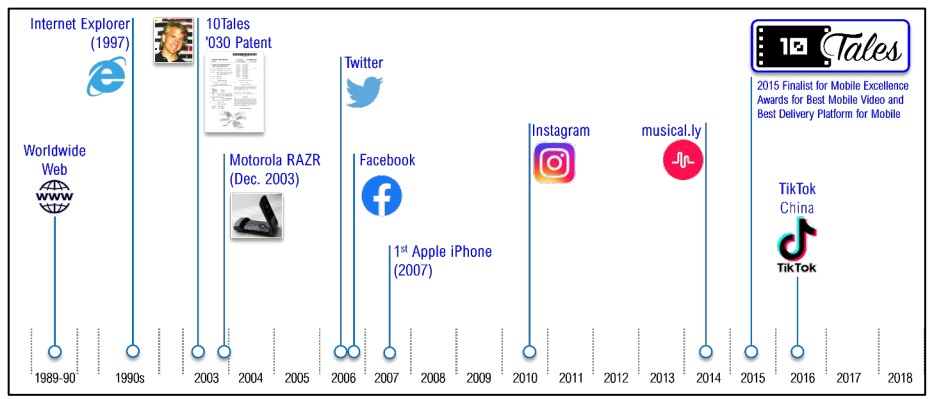
The '030 patent, filed in April 2003, is directed to a system that retrieves information about users from their interactions in online communities and uses that information to select and substitute digital media assets, creating personalized content displays. The district court held that claim 1 fails both steps of the Alice framework: at step one, the claim is directed to the abstract idea of personalizing content; at step two, the claim elements are conventional computer functions that do not supply an inventive concept. On appeal, 10Tales argues that the district court over-generalized the claim at step one and failed to recognize that retrieving "user social network information" from external sources and performing "rule based substitution" of digital assets constituted inventive features at step two.