Search Results for: GitHub-Foundations Online Prüfung 🍃 GitHub-Foundations Übungsmaterialien 🐝 GitHub-Foundations Testing Engine 🤹 Öffnen Sie 【 www.itzert.com 】 geben Sie ⮆ GitHub-Foundations ⮄ ein und erhalten Sie den kostenlosen Download 🕑GitHub-Foundations Tests
Respect for Judgment: Challenging the Federal Circuit’s Unique Finality Rule
Service of Process and Theft of Ideas
Congress Moving Forward with Open App Marketplace Legislation
Schedule-A Example
The MPF Resurrection: Still Waiting for a Miracle?
Sierra Applied Sciences v. Advanced Energy Ind.
Smithkline Beecham v. Apotex
[PART II]
Federal Circuit: Lifestream Diagnostics v. Polymer Technologies
Supreme Court Closer to Reviewing Hatch-Waxman Safe Harbor Patent Case
Supreme Court to Hear Patent Case Merck v. Integra.
SmithKline Beecham v. Apotex part VI
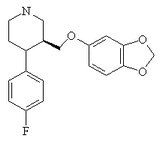 In the CAFC’s April 8 decision of SmithKline Beecham v. Apotex, the en banc panel vacated the original appellate court’s opinion relating to the experimental use exception to the public use bar of 102(b). The lower court had, somewhat controversially, found that experimental use may only be used to negate a 102(b) public use if the purpose of the experimental use was to assist in designing or testing of a claimed feature. Thus, because the “clinical trials tested only the safety and efficacy of PHC hemihydrate as an anti-depressant,” the original appellate panel found that those trials were not an experimental use of the chemical compound as claimed in claim 1.
Rather than offering any opinion, the CAFC en banc decision simply vacated the court’s decision. At the same time that the en banc order was released, the three-member appellate panel released their rewritten opinion that avoided the experimental use issue entirely by finding an alternative grounds for finding the patent invalid. Specifically, the court (J. Rader) found that the patent was “inherently anticipated.”
What makes the case even more odd is that, Judge Newman’s dissent from the order declining to hear the case en banc was essentially a written as a dissent from the new Rader decision. Judge Newman criticized the new opinion’s expansion of the doctrine of inherent anticipation, arguing that the “breadth of the panel’s theory of inherent anticipation contravenes long-established precedent.” According to the dissent, if a compound’s existence “is not reasonably known to persons of skill in the field, its later discovery cannot be retrospectively ‘inherently anticipated.’”
According to the new decision, however, inherent anticipation does not require a person of ordinary skill in the art to recognize the inherent disclosure in the prior art at the time the prior art is created. Thus, it appears that a defendant, in order to invalidate a patent, must simply show that, more likely than not, a natural result flowing from an operation taught in the prior art would result in the claimed product.
In this case, the recreated panel found that the prior art was sufficient because it disclosed the manufacture of PHC anhydrate that naturally results in the production of the claimed compound (PHC hemihydrate). However, the court stated that a mere possibility of inherency is not sufficient for anticipation. (Citing Schering Corp.).
In concurrence, Judge Gajarsa found that the manufacture of PHC hemihydrate could be “a natural physical process” occurring “under normal climactic conditions and with no human intervention,” and thus found that it was an unpatentable process of nature.
In short, patent claims drawn broadly enough to encompass products that spread, appear, and “reproduce” through natural processes cover subject matter unpatentable under Section 101–and are therefore invalid.
Gajarsa’s concurrence is a foreshadow to the next few years where patentable subject matter will become a controversial area once again.
Links:
- File Attachment: SKB Apotex en banc order (49 KB)
- File Attachment: SKB Apotex Panel Decision (230 KB)
- SKB Apotex Original Panel Decision (From Georgetown Law Center)
- File Attachment: SKB Apotex District Court.pdf (2443 KB)
- Discussion of the original panel opinion: Part I, Part II, Part III, and part IV.
- Discussion of the en banc order and new appellate opinion: Part V, Part VI
- Howard Bashman provides an excellent commentary on the case via one of his readers.
- Information on SKB’s pay-out in the class action antitrust suit. (Link).
Inconsistency Between Views of Two PTO Examiners Found Relevant to Obviousness Determination During Litigation
 Syntex v. Apotex (Fed. Cir. 2005).
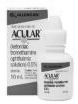
Apotex filed an ANDA to begin marketing a generic version of ACULAR, an ophthalmic NSAID protected by a patent owned by Syntex. Based on the Section IV filing, Syntex filed suit against Apotex for patent infringement.
After a bench trial, the district court determined that the proposed generic infringed the claims of the ACULAR patent and that the patent was not invalid.
Regarding invalidity, the district court concluded that Syntex had overcome obviousness issues by showing that the prior art taught away from the use of the drug/surfactant for opthalmic uses and that such a use created “unexpected results.” In its decision, district court noted that because the prior art at issue had been before the examiner during prosecution, the burden of proving the challenged claims obvious “is particularly high” — and that Apotex had failed to meet this heightened burden.
On appeal, the CAFC reversed — finding “clear error by the district court in several of the grounds that led it to conclude that the invention claimed by the claims in suit would not have been obvious.”
Of the several grounds for reversal, the issues of examiner discrepancy, expert testimony, and commercial success may be the most interesting:
Examiner Discrepancies:
Two different PTO examiners worked on various portions of the asserted application and its parent applications and had seemingly inconsistent views regarding patentability of the application. The CAFC found this relevant to the obviousness determination.
This statement contradicted the express finding of the initial PTO examiner that Syntex’s earlier data failed to show unexpected results. Whether the second examiner was aware of the earlier rejection of Syntex’s claims is unknown. But the relevance of the inconsistency between the views of two examiners is not insignificant.
Although we conclude . . . that Syntex did not commit inequitable conduct . . . we think the unvarnished view of the prosecution history shows some weakness in the conclusion that the patentee established unexpected results for the claimed surfactant.
Expert Testimony:
The Appellate Panel found that the district court erred by failing to examine Apotex’s expert testimony on the question of motivation to combine and unexpected results.
Commercial Success:
The district court relied heavily on the commercial success of ACULAR in its nonobviousness decision. However, the CAFC requested that the lower court revisit this issue in light of the recent case of Merck v. Teva.
In Merck, the court found that commercial success of an FDA restricted product “has minimal probative value on the issue of obviousness. . . . Financial success is not significantly probative . . . because others were legally barred from commercially testing the [] ideas.”
Concurrence:
In a concurring opinion, Judge Prost disagreed with a portion of the majority opinion that made note of “inconsistency between the views of two examiners” who examined the asserted application and a parent application.
In general, I fail to see how the conduct of a patent applicant is relevant to an obviousness determination. Alleged misconduct at the PTO, in terms of either mischaracterizations or omissions, goes to the heart of an inequitable conduct inquiry but is simply irrelevant to an obviousness inquiry.
Links: