Short post today because I’m surfing in Puerto Rico on Spring Break. Speaking of breaks – Some legal deadlines bend. Others break you.
In Brown v. United States, No. 26-1179 (Fed. Cir. Mar. 23, 2026), the Federal Circuit dismissed an appeal because the notice of appeal arrived outside the 60-day statutory window. The court reaffirmed that this deadline is mandatory and jurisdictional, meaning no court has authority to forgive a late filing. Marandola v. United States, 518 F.3d 913 (Fed. Cir. 2008). Mr. Brown was apparently incarcerated when he filed his notice, but he did not submit any declaration establishing timely deposit in the prison mail system under Fed. R. App. P. 4(c). The “mailbox rule” can help, but only with proper certification.
As a reminder, the deadline for filing a notice of appeal from a district court judgment is just 30 days under 28 U.S.C. § 2107(a), while parties appealing a PTAB final written decision in an IPR have 63 days under 37 C.F.R. § 90.3(a)(1).
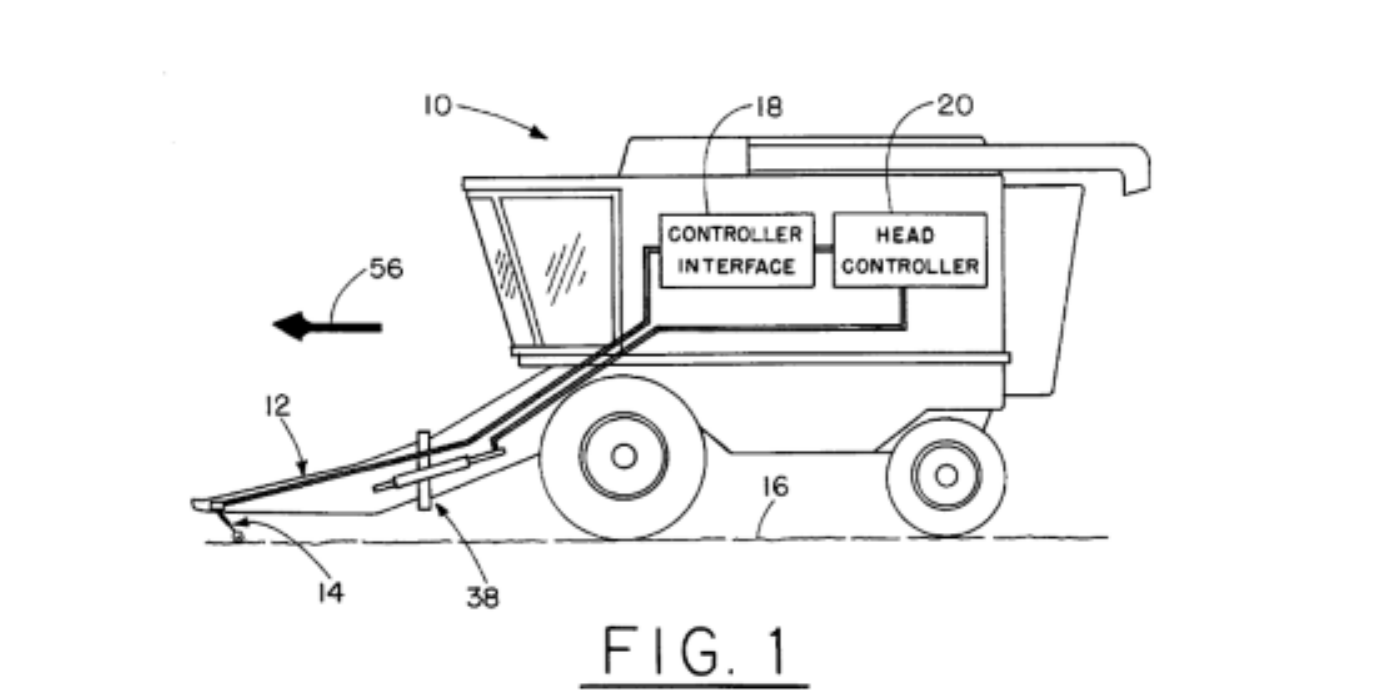
by Dennis Crouch Patent attorneys will recognize the case name Graham v. John Deere Co., 383 U.S. 1 (1966), as the Supreme Court's foundational statement on obviousness under 35 U.S.C. § 103. Sixty years later, a new case with nearly the same name has arrived at the Federal Circuit, though this one is spelled with two m's. Gramm v. Deere & Company, No. 2024-1598 (Fed. Cir. Mar. 11, 2026), involves neither obviousness nor the Graham factors. Instead, it offers an illustration of means-plus-function claiming under § 112(f) and the doctrinal hazards. The Federal Circuit, in a unanimous opinion by Judge Reyna joined by Judges Lourie and Cunningham, reversed the district court's indefiniteness finding and remanded for further proceedings.
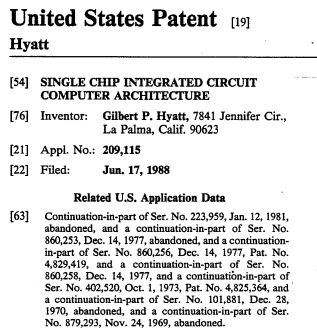
Gilbert P. Hyatt has been litigating with the U.S. Patent and Trademark Office for longer than many patent attorneys have been alive. In 1968, Hyatt quit his engineering job at Teledyne and retreated to the family room of his Northridge, California home to design a computer that could fit on a single silicon chip. He filed his first patent application in December 1970, and the Patent Office eventually granted him US Patent No. 4,942,516 for "Single Chip Integrated Circuit Computer Architecture." That was in 1990, twenty years after filing. The patent was later partially invalidated in an interference with Texas Instruments, but Hyatt had already collected millions in licensing fees from Sony, Nikon, Sharp, Toshiba, Philips, and Panasonic.
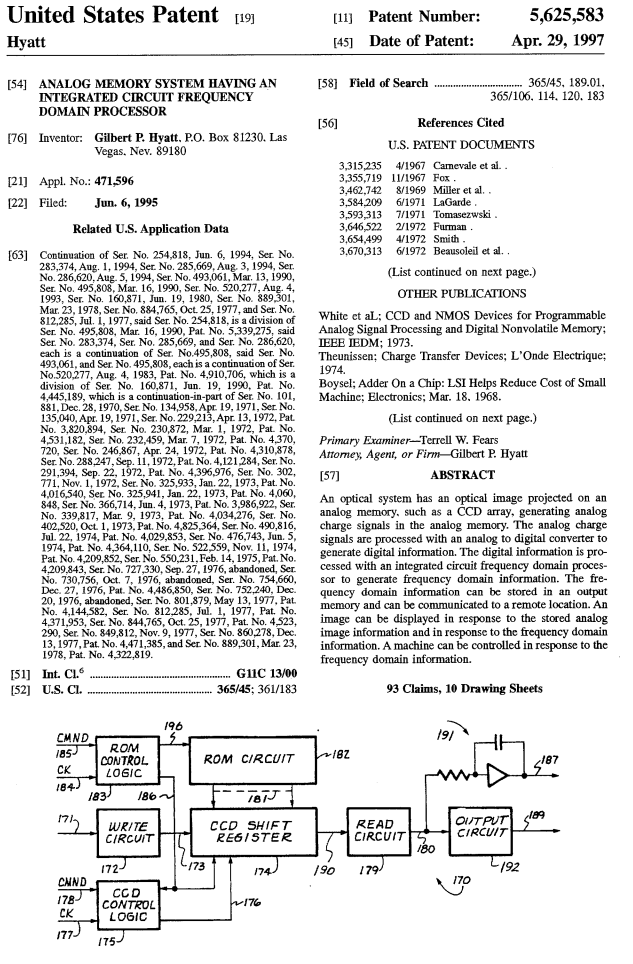
Hyatt holds 75 issued patents. And, he is also no stranger to the Supreme Court. In Kappos v. Hyatt, 566 U.S. 431 (2012), a unanimous Court sided with him on the scope of de novo review in § 145 civil actions against the PTO. And the Justices heard Franchise Tax Board of California v. Hyatt three separate times, in 2003, 2016, and 2019, in a sprawling tax dispute that ultimately led the Court to overrule Nevada v. Hall and hold that states have sovereign immunity from private suits in sister-state courts. 587 U.S. 230 (2019). Now, at 87, Hyatt is petitioning the Supreme Court once again, this time asking the Justices to take up a question that has been brewing for more than two decades: whether the judicially created doctrine of "prosecution laches" can override the Patent Act's statutory timing provisions to deny a patent to an applicant who met every deadline Congress set. Hyatt v. Squires, No. 25-1049 (cert. petition filed Mar. 2, 2026).
The petition presents a clean and focused question of law with potentially major consequences. Hyatt argues that the Federal Circuit's prosecution laches doctrine directly conflicts with the Supreme Court's holdings in SCA Hygiene Products Aktiebolag v. First Quality Baby Products, LLC, 580 U.S. 328 (2017), and Petrella v. Metro-Goldwyn-Mayer, Inc., 572 U.S. 663 (2014), both of which held that laches is a "gap-filling doctrine" that cannot apply when Congress has enacted statutory timing rules. The Patent Act, Hyatt argues, contains comprehensive timing provisions governing every step of prosecution, from initial filing through continuation practice, office action responses, PTAB appeals, and judicial review. With no gap to fill, there is no room for the courts or the PTO to invent their own timeliness rules.
Although Hyatt's case involve extreme timelines, there are many who would like to expand the laches doctrine to encompass a much wider swath of cases. According to PTO data cited in the petition, nearly 20% of all continuation patent applications are filed more than six years after earliest US filing date, and over a third of the patents protecting the most successful pharmaceutical products exceed that threshold. Under the Federal Circuit's six-year delay presumption used in other contexts, all of these patents are potentially vulnerable.
Two weeks after the Supreme Court declared the IEEPA tariffs illegal, and two days after the Federal Circuit issued its mandates returning the case to the trial court, U.S. Customs and Border Protection was still liquidating import entries with the unlawful duties baked in. No refunds had been issued. White House controlled CBP Automated Commercial Environment system kept churning through previously filed entries as if Learning Resources, Inc. v. Trump, 607 U.S. ___ (2026), had never happened.
In Atmus Filtration, Inc. v. United States (Ct. Int’l Trade Mar. 4, 2026), Judge Richard Eaton issued an order that goes well beyond the individual case before him. Eaton declared that “all importers of record whose entries were subject to IEEPA duties are entitled to the benefit of the Learning Resources decision” and directed CBP to liquidate all unliquidated entries “without regard to the IEEPA duties.” For entries already liquidated but not yet final, CBP must reliquidate on the same terms. The order applies regardless of whether an importer has filed its own complaint. To hold otherwise, Judge Eaton wrote, “would be to thwart the efficient administration of justice and to deny those importers who have filed suit the efficient resolution of their claims, and to deny entirely importers who have not filed suit the benefit of the Learning Resources decision.” The CIT’s Chief Judge has designated Eaton as the sole judge for all IEEPA refund cases, and Eaton has scheduled a closed conference for March 6 at which the government must present a plan for administering refunds without requiring each of the thousands of affected importers to file individual complaints. (more…)
Obviousness occupies an unusual place in patent law's procedural architecture. The Supreme Court in Graham v. John Deere Co., 383 U.S. 1 (1966), declared it "a question of law" while simultaneously identifying four "underlying factual inquiries" that must be resolved: the scope and content of the prior art, differences between the prior art and the claims, the level of ordinary skill, and any objective indicia of nonobviousness. The Graham test does not explain where we fit in additional inquiries of motivation-to-combine and reasonable-expectation-of-success, but we do know that these are also factual questions. What that means procedurally is that the judgment of the fact finder (often a jury or PTAB panel) is given deference on appeal.
But the mixed character of obviousness gives the Federal Circuit a powerful tool. By recharacterizing a fact-finder's assessment of the evidence as reflecting error of a "legal standard," the court can sidestep deferential review entirely. Questions of law are reviewed afresh - de novo - on appeal without any deference given to the lower court's judgment or reasoning. A new nonprecedential decision illustrates how this works in practice. Medivis, Inc. v. Novarad Corp., No. 2024-1794 (Fed. Cir. Mar. 3, 2026).
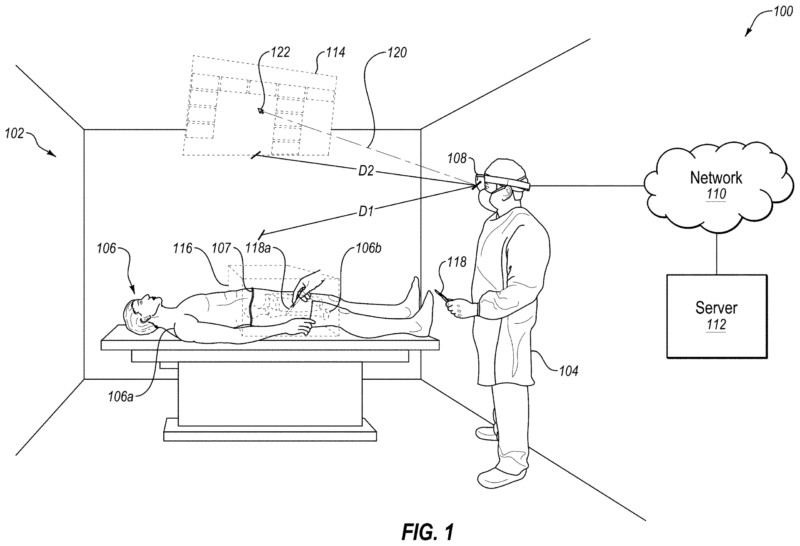
The patent at issue, US11004271, covers methods of augmenting a surgeon's real-time view of a patient through an augmented reality headset.
The Federal Circuit’s role as the appellate court for international trade disputes has thrust it into the center of the most consequential separation-of-powers case in a generation. On February 20, 2026, the Supreme Court affirmed the Federal Circuit’s en banc ruling that the International Emergency Economic Powers Act (IEEPA) does not authorize the President to impose tariffs. Learning Resources, Inc. v. Trump, 607 U.S. ___ (2026); Trump v. V.O.S. Selections, Inc., 607 U.S. ___ (2026). And today, the Federal Circuit dissolved the stay that had held its mandate in abeyance since August 2025, ordering its mandates to “issue forthwith.” V.O.S. Selections, Inc. v. Trump, Nos. 2025-1812, -1813 (Fed. Cir. Mar. 2, 2026) (en banc per curiam). The case now returns to the Court of International Trade (CIT), which faces the formidable task of overseeing what could be the largest government refund obligation in American history: an estimated $175 billion in IEEPA tariff collections that the nation’s highest court has declared unlawful.
The briefing on the mandate motion offers a window into the pace of potential refunds. Former US Solicitor Neal Katyal (now with Milbank), representing the V.O.S. plaintiffs, filed the motion on February 24, arguing that the Supreme Court’s judgment satisfied the express condition this Court had set for releasing the mandate and that every day of delay inflicted real harm on the small businesses awaiting refunds. The motion quoted Treasury Secretary Bessent’s public statement that refunds would not issue until the CIT ordered them, and President Trump’s suggestion that the question would “get litigated for the next two years.” The government’s opposition, filed by the DOJ Appellate Staff, urged the court to wait at least until the Supreme Court formally sends down its certified judgment (32 days after entry under Supreme Court Rule 45.3), and cross-moved for a 90-day stay to “allow the political branches an opportunity to consider options.” The government invoked Northern Pipeline Construction Co. v. Marathon Pipe Line Co., 458 U.S. 50 (1982), where the Supreme Court stayed its own judgment to give Congress time to respond. DOJ also characterized the plaintiffs’ monetary harm as compensable rather than irreparable, and warned that the refund process would be protracted regardless. Katyal’s reply, filed over this past weekend was pointed: the government “cites nothing” for the proposition that this Court must wait for the Supreme Court’s certified judgment and the government notably did not deny the force of its own stipulations guaranteeing refunds to all similarly situated plaintiffs. (more…)
Five more mandamus petitions challenging IPR institution denials. Five more denials. In a series of nonprecedential orders issued between February 24 and 27, 2026, the Federal Circuit rejected every theory that petitioners offered for why the USPTO's discretionary denial of inter partes review should be subject to judicial oversight. The petitioners included major technology companies (Intel, Tesla), a Chinese communications firm (Kangxi Communication Technologies), an education technology company (Kahoot!), and a startup founded by the very inventors of the patents it sought to challenge (Tessell). Each presented a different factual scenario and a different legal theory. None succeeded. In re Kangxi Communication Technologies (Shanghai) Co., Ltd., No. 2026-115 (Fed. Cir. Feb. 24, 2026); In re Intel Corp., No. 2026-113 (Fed. Cir. Feb. 24, 2026); In re Tessell, Inc., No. 2026-117 (Fed. Cir. Feb. 24, 2026); In re Kahoot! AS, No. 2026-119 (Fed. Cir. Feb. 25, 2026); In re Tesla, Inc., No. 2026-116 (Fed. Cir. Feb. 27, 2026).
During patent prosecution, an inventor wrote to his attorney in the margin of a draft declaration: "I am not sure it is a good idea to disclose this document." The district court called this "a rare example of direct evidence of an intent to defraud." A magistrate judge agreed. The patent was declared unenforceable for inequitable conduct on summary judgment. Case closed. Or so it seemed.