by Dennis Crouch
Director Squires has designated as precedential a new decision restricting parallel IPR petition practice at the PTAB. In PacifiCorp v. Birchtech Corp., IPR2025-00687, Paper 40 (P.T.A.B. Jan. 12, 2026), the Director vacated institution decisions in four inter partes review proceedings where petitioners had filed two petitions against each of two patents. The petitions divided their invalidity arguments according to two separate invalidity theories: (a) pre-priority-date prior art and (b) intervening art that required challenging the patent's priority claim. Director Squires held that this parallel-petition strategy was not justified because petitioners had ample room in each petition to present alternative arguments. The decision follows and cites Acting Director Stewart's June 2025 decision in CrowdStrike, Inc. v. GoSecure, Inc., IPR2025-00068, Paper 25 (P.T.A.B. June 25, 2025) (informative), which similarly vacated dual institutions, but the precedential designation of PacifiCorp nominally converts this guidance into binding Board practice.
A major caveat: the precedential status of this decision does not actually constrain USPTO institution practice since institution decisions are no longer decided by the Board but rather by Dir. Squires himself. To borrow from James Madison in Federalist No. 48, this designation is a mere 'parchment barrier.' It provides the appearance of structural constraint, but the Director holds the power to both legislate the rules and decide the cases. And, as the government recently argued before the Federal Circuit, the Director is not bound by PTAB precedent. One might recall the apocryphal boast attributed to Louis XIV: "L'État, c'est moi." Designating a decision as binding on "the Board" is a semantic distinction without a difference when the Director is the entire patent office; or as it were, "L'Office, c'est moi."
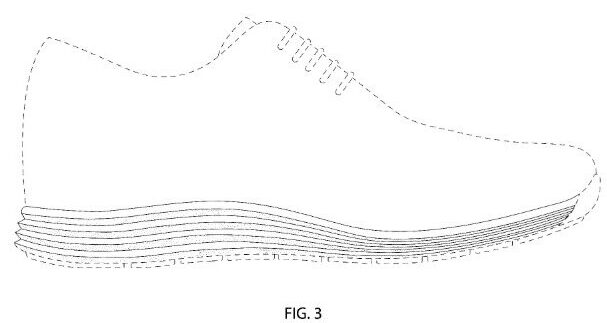
Second Decision: Director Squires has also issued an informative decision in Top Glory Trading Group Inc. v. Cole Haan LLC, IPR2025-01395, Paper 18 (P.T.A.B. Jan. 12, 2026), refusing discretionary denial in a design patent case. Petitioner The Patentee had argued that settled expectations should shield the patent from review, but the Director rejected this argument based upon the unique design patent circumstances. In particular, the Federal Circuit's 2024 decision in LKQ Corp. v. GM Global Technology Operations LLC, 102 F.4th 1280 (Fed. Cir. 2024), fundamentally changed design patent obviousness doctrine and thus removed assurances that the patent was properly examined for obviousness.
Notably, the decision confirms that settled expectations generally remains an important discretionary consideration under current USPTO policy, but clarifies that a significant change in law can overcome reliance-based arguments.