101 Ways Not to Invalidate: Federal Circuit Rejects Sua Sponte Eligibility Ruling

by Dennis Crouch

The Federal Circuit’s recent decision in Astellas v. Sandoz emphasized the importance of the “party presentation principle” — that, for the most part, courts should rely upon the parties to frame the issues that need a ruling.  Visiting Delaware, Nebraska District Court Judge Bataillon had issued a sua sponte ruling that certain pharmaceutical patent claims were invalid under 35 U.S.C. § 101 — even though the defendant had not moved for such a ruling.  On appeal, the Federal Circuit has vacated and remanded — “trusting” that on remand Judge Bataillon “will take an objective, measured, and thorough look into the legal issues and evidence of record to resolve only those disputes that exist between the parties.”

Judge Bataillon’s colorful opinion language asserted that the branded and generic pharma companies have colluded to pervert the intent of Hatch-Waxman.  On remand, it may be substantially drier.

Decision: 23-2032.OPINION.9-18-2024_2386574

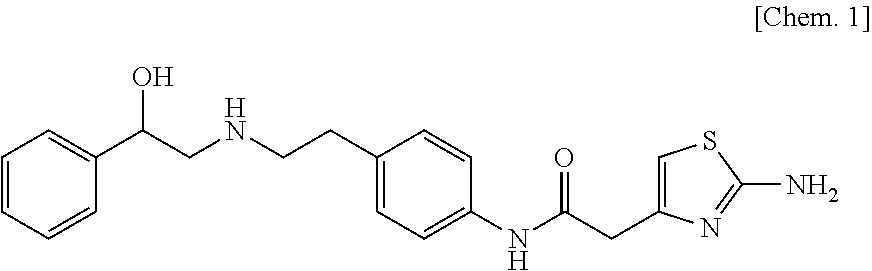
Background and District Court Proceedings: Astellas Pharma owns U.S. Patent 10,842,780, which covers extended-release mirabegron tablets for treating overactive bladder. Mirabegron is a beta-3 agonist that stimulates beta receptors in the bladder, inducing relaxation and apparently improving bladder function. During development, Astellas discovered that immediate-release formulations of mirabegron exhibited an undesirable “food effect,” where bioavailability varied significantly depending on whether the drug was taken with or without food. To solve this problem, Astellas developed sustained-release formulations that mitigated the food effect.

The asserted claims (5, 20, and 25) of the ‘780 patent are directed to:

  1. A pharmaceutical composition comprising mirabegron in a sustained release hydrogel-forming formulation
  2. A method of treating overactive bladder using the composition
  3. A tablet comprising the composition

Astellas sued several generic drug manufacturers, including Sandoz, for patent infringement based on their Abbreviated New Drug Applications (ANDAs) seeking approval to market generic versions of Astellas’s Myrbetriq product. The case proceeded to a bench trial on issues of infringement and validity under 35 U.S.C. § 112. Notably, Sandoz had waived any invalidity challenges under §§ 101, 102, and 103 prior to trial.

Following trial, the district court issued a decision sua sponte holding the asserted claims invalid under § 101 as directed to patent-ineligible subject matter. The court relied on Astellas’s statements in post-trial briefing that the “inventive concept” of the patent centered around the discovery that dissolution rate that would address the food effect and that the solution was achieved through conventional formulation technology.  In particular, the patentee admitted to the judge:

The inventive concept of the ’780 Patent was discovering the dissolution rate that would address the food effect and achieving it using previously known formulation technology.

The district court interpreted this as a concession that the patent claimed ineligible subject matter: “a natural law applied via routine, conventional, and well-known methods.”

You might be thinking – Why would the patentee make these admissions? The answer stems from the procedural posture of the case.  A key way to overcome enablement and written description challenges is to demonstrate that the invention was within the skill and knowledge of ordinary artisans. Those sort of admission would typically raise often raise obviousness and – as here – eligibility questions.  But, the patentee felt safer in this case because these admissions were made in post-trial briefing after the patent challenger had waived its obviousness and eligibility defenses.  Still, the admissions caught the eye of the Judge who could not then look away.

Federal Circuit Decision: On appeal, the Federal Circuit vacated the district court’s judgment, holding that the court abused its discretion by disregarding the party presentation principle. Writing for a unanimous panel, Judge Lourie emphasized that courts should “rely on the parties to frame the issues for decision and assign to courts the role of neutral arbiter of matters the parties present.” (quoting Greenlaw v. United States, 554 U.S. 237 (2008)).

The Federal Circuit explained that while the party presentation principle is “supple, not ironclad,” rendering a patent invalid on grounds not advanced by any party is not an appropriate circumstance for judicial initiative. The court pointed to 35 U.S.C. § 282, which establishes the presumption of patent validity and places the burden of proving invalidity on the challenger. This statutory framework mandates that invalidity defenses must be proven by clear and convincing evidence as explained by Microsoft Corp. v. I4I Ltd. P’ship, 564 U.S. 91 (2011).

Judge Lourie clarified that a court’s role in patent validity disputes is simply “to determine whether the patent’s challenger carried the burden of establishing invalidity.” The court rejected any notion that patent eligibility under § 101 should be treated as a threshold jurisdictional inquiry akin to subject matter jurisdiction, which courts have an independent duty to address. Instead, the presumption of validity applies equally to all grounds of invalidity, including § 101.

Sandoz presented several cases (all from the 1800s) where the Supreme Court had departed from the party presentation principle in patent cases – particularly with regard to eligibility.  The key case on point is Slawson v. Grand Street, P.P & F.R. Co., 107 U.S. 649 (1883), which included the following statement:

If letters patent are void because the device or contrivance described therein is not patentable, it is the duty of the court to dismiss the cause on that ground whether the defense be made or not. It would ill become a court of equity to render money decrees in favor of a complainant for the infringement of a patent which the court could see was void on its face for want of invention. Every suitor in a cause founded on letters patent should, therefore, understand that the question of whether his invention is patentable or not, is always open to the consideration of the court, whether the point is raised by the answer or not.

Id. See also, Brown v. Piper, 91 U.S. 37 (1875); and Dunbar v. Myers, 94 U.S. 187 (1876).  Despite the clarity of the Supreme Court’s words, the Federal Circuit still disregarded these cases. In particular, the appellate panel found them no longer valid precedent because of the “Patent Act of 1952’s codification of a patent’s
presumption of validity and the requirement that a patent challenger affirmatively plead its defenses.” The court also rejected policy arguments about the public interest in invalidating weak pharmaceutical patents, emphasizing that such concerns are irrelevant to the scope of a court’s authority to deviate from the case presented by the parties.

Although this case was decided on the party presentation principle, the court also expressed “serious doubts” on the holding that “nonnatural compositions of matter and associated methods of use” were ineligible.

Reassignment Request: The Federal Circuit denied Astellas’s request to reassign the case to a different district court judge on remand.  In requesting reassignment, the patentee had noted the erroneous interjection of the 101 issue, but also focused on a particular remark made by the judge against the pharmaceutical industry generally — that the brand and generic companies are colluding to avoid certain judgments, such as ineligibility.

The Court senses a more fundamental flaw in the assertion that patent litigants may, in essence, consent around the bounds of patent eligibility. By the Hatch-Waxman Act of 1984, Congress sought to remedy the dysfunctional market for pharmaceutical drugs, enacting a  scheme of interlocking incentives to speed low-cost generic drugs to market, while still driving new (brand) drug development.

The pharmaceutical industry, to put it mildly, has perverted this intent. With alarming regularity since, brand and generic drug manufacturers have colluded to protect weak or invalid patents and share in the startling profits.

DCT Order Denying Motion. While expressing concern about some of the district court’s commentary regarding the pharmaceutical industry, the Federal Circuit ultimately concluded that reassignment was not warranted.

= = =

I wanted to step back and look at the district court’s opinion holding the claims ineligible.  The court relied primarily on the Supreme Court’s decision in Mayo v. Prometheus and holding that Astella’s admissions that the “inventive concept” of the patent was merely discovering the dissolution rate that would address the food effect and achieving it using previously known formulation technology.

The court further elaborated that the extended-release dissolution limitation reflected merely the discovery of a food-effect-resolving dissolution profile, which it characterized as a natural law existing apart from human action. The additional elements of the claims, such as the hydrogel-forming polymer and hydrophilic additive, were deemed by the court to amount to no more than the directive to “apply it” using well-known techniques for formulating sustained release tablets. The court found that the asserted claims did not add significantly more to the natural law, as they merely narrowed the list of polymers to use, excluded certain forms of mirabegron, formulated the dosage into a tablet, and claimed a method of treating overactive bladder – all of which were considered to be routine tasks for skilled artisans in the field.

Read the opinion here: Astellas district court 101 ruling

= = =

Judge Lourie’s opinion was joined by Judges Prost and Reyna.

Paul Hughes of McDermott Will & Emery argued for Astellas; joined on the brief by Simon Roberts, Jason Leonard, Andrew Lyons-Berg, and Charles Seidell all from MWE, along with Daniel Silver from McCarter & English.

William Zimmerman of Knobbe Martens argued for Lupin and Sandoz; joined on the briefs by Andrea Cheek and Carol Cruz.

Jason Okun at Venable handled prosecution of the patent application.