Read more here:

by Dennis Crouch
Quick post in a trio of non-precedential decisions. Case1Tech, LLC v. Squires, Nos. 23-2305, 23-2294, 23-2335 (Fed. Cir. Oct. 9, 2025) (all nonprecedential).
The basic holding: A party may not alter the scope of the claim construction positions it took before the Board. Claims constructions not presented to the lower tribunal (here the PTAB) will not be considered on appeal in the absence of exceptional circumstances.
Samsung had petitioned for IPR of ST Case1Tech’s always-on recording patents, arguing that the claimed “audio forensics analysis system” encompassed speech-to-text functionality disclosed in the prior art. Before the Board, Case1Tech argued that “analysis” means “calculation of noise dosage” using a specific measurement used for hearing protection. After losing at the Board, Case1Tech altered its position on appeal, arguing that audio forensics analysis merely “includes” noise dosage calculation and encompasses any “analysis that uses all captured acoustic data.” I think that their idea on appeal is that this broader construction would be more defensible, while still being narrow enough to avoid the prior art speech-to-text analysis system.
The appellate panel rejected this maneuver based upon forfeiture. Case1Tech told the Board that audio forensics analysis “is the calculation of noise dosage,” it could not later argue on appeal that such analysis merely “includes” noise dosage calculation.
Despite finding forfeiture, the appellate panel also looked at the argument and found it lacked merit. The specification explicitly stated that “audio forensics analysis system” includes “all, either or a combination of” enumerated functionalities, specifically listing “a speech-to-text analysis system.” This intrinsic evidence was dispositive. (more…)
by Dennis Crouch
When the Supreme Court in Cuozzo Speed Technologies v. Lee, 579 U.S. 261 (2016), barred judicial review of the USPTO's decisions to institute (or deny institution) of inter partes review, it left a small door ajar for agency "shenanigans." This post asks whether USPTO Director John Squires recent decision in Interactive Communications International, Inc. v. Blackhawk Network Inc., IPR2024-00465 (Dir. Rev. Oct. 1, 2025), may be the case that finally gives "shenanigans" real content.
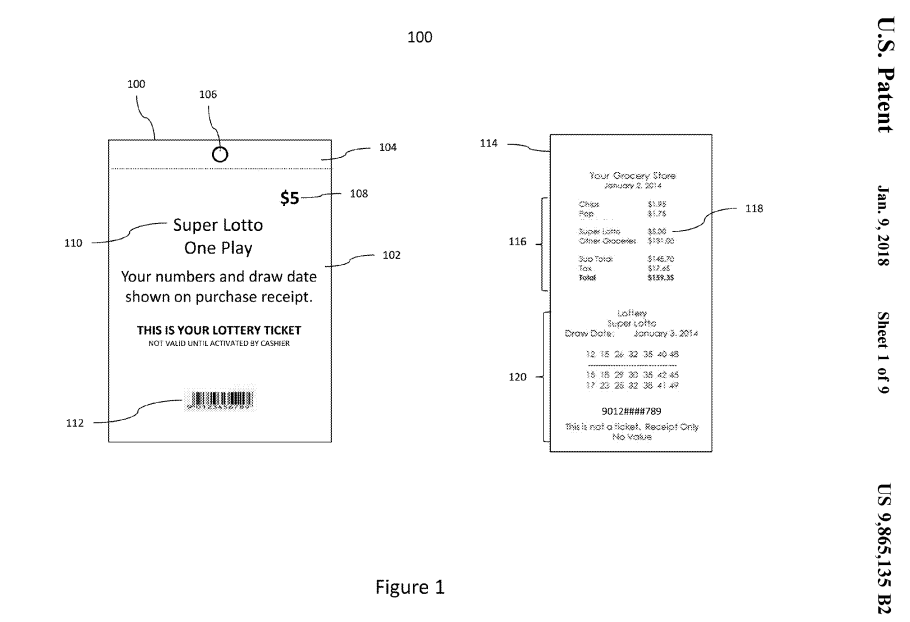
In Blackhawk, Director John Squires vacated a PTAB final written decision (FWD) that had already found all challenged claims unpatentable. Ordinarily a director review decision would still be appealable to the Federal Circuit, but Dir. Squires took the case to the next step. In addition to rejecting the PTAB opinion, Dir. Squires also terminated the proceeding and expressly declared that his order "does not constitute a final written decision under § 318(a)." The maneuver left the petitioner without an appealable decision -- even though the case had already been fully litigated and decided on the merits.
This post focuses on the appealability problem raised by Blackhawk and situates it alongside the five pending mandamus petitions now before the Federal Circuit challenging the Trump Administration's expanding assertion of institutional control over IPR proceedings. The pattern here is clear and undisputed that USPTO leadership is using the cloak of § 314(d)'s nonappealability to achieve policy ends. The question though is whether the aggressive approach crosses some yet-undefined line. Blackhawk is in line with 2025’s broader posture: the Trump Administration has pushed presidential prerogative in many areas of national policy - leveraging statutory gray zones that earlier administrations largely treated with self-restraint. That new assertiveness forces Article III courts to step in and draw clearer outer bounds.
by Dennis Crouch
In US Inventor, Inc. v. United States Patent and Trademark Office, No. 2024-1396 (Fed. Cir. Oct. 3, 2025), a group of inventor advocacy organizations petitioned the USPTO for rulemaking that would allow small entity patent owners to opt out of inter partes review and post-grant review proceedings. The USPTO denied their petition and the orgs sued, led by US Inventor. Their lawsuit was dismissed by the district court and the appellate panel has affirmed - holding that the organizations lacked Article III standing because the alleged injury to their members was too speculative, requiring a chain of contingent events largely dependent on the independent actions of third parties.
US Inventor and National Small Business United had filed a rulemaking petition in August 2020 proposing amendments to 37 C.F.R. sections 42.108 and 42.208 that would prohibit institution of IPR or PGR proceedings if the patent owner objected and met certain criteria, including being a small or micro entity who was the original patent applicant and had actually reduced the challenged claims to practice. The USPTO denied the petition in October 2021, explaining that the issues raised overlapped with those in a separate request for comments and that the petition's suggestions would be considered in any future rulemaking. When the organizations challenged this denial in district court under the Administrative Procedure Act, the district court dismissed for lack of standing, and the Federal Circuit affirmed that dismissal applying D.C. Circuit law.
Associational Standing Requirements Organizations can assert "associational standing" to sue on behalf of their members if three requirements are met: (1) at least one member would have standing to sue in their own right; (2) the interests at stake are germane to the organization's purpose; and (3) neither the claim nor the relief requires participation of individual members. Only the first element was contested in this appeal. To establish individual standing, a plaintiff must show injury in fact that is concrete and particularized, actual or imminent (not conjectural or hypothetical), fairly traceable to the defendant's conduct, and likely redressable by a favorable decision.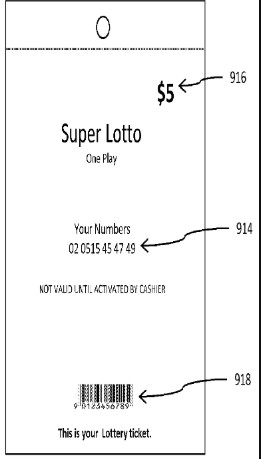 by Dennis Crouch
In his first Director Review decision, new USPTO Director John Squires has gone the extra mile -- in addition to granting director review and reversing the Board's decision favoring the patent challenger, Dir. Squires also ordered immediate termination of the proceedings based upon unreliable expert testimony. This more dramatic termination is important because that looks more like a withdrawal of institution which is not appealable.
Interactive Communications Int’l, Inc. v. Blackhawk Network Inc., IPR2024-00465. [IPR2024-00465 Director Review Decision]
Blackhawk's challenged U.S. Patent No. 11,488,451 a method for selling pre-printed lottery tickets through a retailer’s existing point-of-sale (POS) terminals without requiring specialized lottery hardware. Instead of printing a new ticket at a dedicated lottery terminal, the system uses pre-manufactured tickets that carry unique identifiers and are activated when scanned and paid for at checkout. This framework allows the pre-printed ticket itself (once activated) to serve as the legal lottery instrument, while enabling lottery sales across all checkout lanes without specialized installations.
In Rex Medical, L.P. v. Intuitive Surgical, Inc., No. 2024-1072 (Fed. Cir. Oct. 2, 2025), we find yet another decision involving the Federal Circuit overturning a jury's damages verdict. A jury had awarded $10 million for the infringement that was reduced to nominal damages of $1.
Key holdings:
There is a lot to question about this decision, but ultimately I think it comes down to the statement that Intuitive's attorney made at oral arguments:
Melanie L. Bostwick: This is not in the record because Rex didn't do its job in present this evidence.
Background: Days before trial, District Judge Maryellen Noreika excluded Rex's damages expert Douglas Kidder from testifying about the key comparable license in the case—a $10 million settlement agreement between Rex and Covidien that covered not only the '650 patent at issue, but also a related patent that had been the subject of a lawsuit (the '892 patent), eight other U.S. patents, seven U.S. patent applications, and nineteen foreign patents or applications. The district court found that Kidder had failed to adequately apportion the license payment among all these patents, rendering his methodology unreliable.
Trial moved forward without expert testimony. The jury was provided the prior license and heard testimony from Rex's president Lindsay Carter, who had negotiated the prior license. Intuitive cross examined Carter, but did not provide any witnesses or other evidence to prove no damages or a lower damages amount. Intuitive had been prepared to call its own damages expert (Todd Schoettelkotte), who had opined that a reasonable royalty would have been about $1–1.6 million. The Jury ultimately found infringement and awarded $10 million in damages.
On post-trial motions, the district court granted judgment as a matter of law reducing the damages award to $1, finding that the jury lacked sufficient evidence to apportion the Covidien license to the '650 patent alone. The court also denied Rex's request for a new damages trial, reasoning that Rex had the opportunity to present other evidence but chose to rely on the very license the court had already precluded its expert from using. Rex appealed both the exclusion of its expert and the reduction of the jury award, while Intuitive cross-appealed on infringement and invalidity grounds.
Rex Medical, L.P. v. Intuitive Surgical, Inc., Nos. 2024-1072, 2024-1125 (Fed. Cir. Oct. 2, 2025).
by Dennis Crouch
The federal government shutdown that began at 12:01 AM on October 1, 2025, is creating a patchwork of disruptions across the nation’s intellectual property infrastructure, with each major system affected differently based on their funding structures. The Copyright Office is apparently completely shuttered, its staff unable to access email or respond to inquiries.
As I discussed yesterday, the USPTO remains operational by drawing on fee-based reserve funds built up over recent years. But, the new news is an announced 1% workforce reduction (~1500 people) today along with closure of its Denver Office as part of “mission-prioritization.” Interestingly, the agency cited to a Biden-era report to Congress that “physical office space is less necessary” primarily because of the successful telework policies. The current administration has taken extensive steps to eliminate those policies. [Updated to fix my math – 150 people fired, not 1,500.]
by Dennis Crouch
In Focus Products Group International, LLC v. Kartri Sales Co., Inc., No. 2023-1446 (Fed. Cir. Sept. 30, 2025), the Federal Circuit reversed patent infringement findings against one defendant (Marquis Mills) while affirming most findings against another (Kartri Sales).
The most important part of the decision for patent prosecutors focuses on examiner driven restriction practice and how that can be used to define claim scope. The case also delves into trademark and trade dress issues that I leave for a separate post.
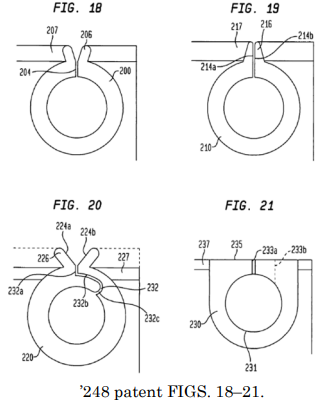
The patents at issue—U.S. Patent Nos. 6,494,248, 7,296,609, and 8,235,088—cover “hookless” shower curtains that attach directly to a shower rod through reinforced ring openings with slits. This integrated approach eliminates the need for separate hooks or clips. The representative claims recite shower rings with specific design features: a slit extending through the ring to an opening, and in some claims, a “projecting edge” that extends from the ring’s outer circumference. The accused products, manufactured by Marquis and sold by Kartri under the “Ezy-Hang” brand, featured rings with flat upper edges similar to Fig 21 above —a design feature that became the central battleground for determining infringement.
During prosecution of the ‘248 patent application, the examiner issued a restriction requirement identifying multiple patentably distinct species and defined those species through specific figure groups. Critically, the examiner distinguished “Species IV” (Figures 18-20, depicting rings with projecting fingers or extensions) from “Species V” (Figure 21, depicting rings “with a flat upper edge”). The patentee elected to pursue Species IV without objection – i.e., election without traversal. The patentee then rewrote the claims in a way that no longer focused on the flat upper edge. Except that one such claim slipped in — the patentee had added re-added a dependent claim that expressly “includes a flat upper edge” and the examiner asked it to be withdrawn as a non-elected species. Finally, in the notice of allowance, the examiner indicated that the non-elected claims had been cancelled as “drawn to a non-elected species without traverse;” and the applicant did no object to that characterization or seek reconsideration.
Eventually the Species IV patents issued without any claims focusing on the flat-upper-edge. However, the claim language was broad enough to encompass versions with both curved uppers and flat uppers. The question in the case then is whether the restriction procedure serves as an affirmative disclaimer of the flat upper scope. (more…)
 by Dennis Crouch
The Federal Government's fiscal year begins on October 1, as does the Supreme Court's term. The new term always begins with a "long conference" that considers certiorari petitions briefed over the court's summer break. The conference was held on September 29, 2025, and we will soon be hearing which of these cases (if any) will be granted certiorari.
MSN Pharmaceuticals, Inc. v. Novartis Pharmaceuticals Corp., No. 25-225
This case addresses whether courts may consider after-arising technology when evaluating patent validity under 35 U.S.C. § 112(a)'s written description and enablement requirements. Novartis's patent for Entresto (a blockbuster heart failure drug generating over $3 billion annually) claimed a combination of valsartan and sacubitril, but the actual commercial product uses a form discovered four years after the patent filing that was not particularly described in the original specification. The Federal Circuit held that later-discovered technology cannot invalidate patents, creating some tension with precedents like The Incandescent Lamp Patent, 159 U.S. 465 (1895), and Amgen Inc. v. Sanofi, 598 U.S. 594 (2023), which seem to require patents to enable the full scope of their claims.
Gesture Technology Partners, LLC v. Apple Inc., No. 24-1280 and 24-1281
These cases questions whether the PTAB has constitutional authority under Article III and the public rights doctrine to conduct inter partes review proceedings on patents that expired before the IPR petition was filed. Gesture Technology's camera-based sensing patents expired in 2020, but Apple filed an IPR petition in May 2021, and the PTAB subsequently invalidated the claims, extinguishing Gesture's ability to collect damages for past infringement. The Federal Circuit held that PTAB has jurisdiction over expired patents because patent owners retain limited rights (damages for past infringement), but Gesture argues that once exclusionary rights expire, only Article III courts can adjudicate retrospective damage claims. Gesture also argues that Apple should be estopped under 35 U.S.C. § 315(e)(1) because Apple is a member of Unified Patents and should be treated as a real party in interest or privy, but the Federal Circuit held Gesture forfeited this argument.
R.J. Reynolds Vapor Company v. Altria Client Services LLC, No. 25-158
This case addresses whether the Federal Circuit's "built-in apportionment" exception violates Garretson v. Clark, 111 U.S. 120 (1884), which requires patentees to "in every case give evidence tending to separate or apportion the defendant's profits and the patentee's damages between the patented feature and the unpatented features." After a 2022 jury trial, Reynolds was found to infringe Altria's e-cigarette patents and ordered to pay $95.2 million based on a 5.25% royalty rate calculated using a lump-sum license. The Federal Circuit majority affirmed in December 2024, finding sufficient evidence of "built-in apportionment" in the comparable license, but Reynolds argues this undermines the fundamental requirement to separate the patent's contribution from unpatented features. Reynolds alternatively requests a grant-vacate-remand in light of the Federal Circuit's intervening May 2025 en banc decision in EcoFactor, Inc. v. Google LLC, 137 F.4th 1333 (Fed. Cir. 2025), which vacated a $20 million damages award and held district courts must rigorously assess damages expert testimony regarding comparable licenses.
United Services Automobile Association v. PNC Bank N.A., No. 25-149
This case presents an administrative law question about whether the PTAB's IPR decision was arbitrary and capricious under the Administrative Procedure Act (APA) when it reached different conclusions than prior PTAB proceedings involving "saliently similar facts" but different parties. USAA owns patents covering mobile check deposit technology, and when Wells Fargo challenged these patents in IPR using functionally identical prior art, the PTAB denied the challenges and found claims not obvious, leading to a $200 million jury award against Wells Fargo in 2019.
 by Dennis Crouch
Although the federal government shutdown appears ready to begin at 12:01 AM on October 1, 2025, the United States Patent and Trademark Office is likely to continue in normal operation by drawing on its Operating Reserve which the agency has been building up over the past several years. A prolonged shutdown would eventually exhaust the reserves and trigger an end to spending.
The constitutional foundation for shutdown protocols lies in the Appropriations Clause, which provides that "No Money shall be drawn from the Treasury, but in Consequence of Appropriations made by Law." U.S. Const. art. I, § 9, cl. 7. This clause requires congressional approval before executive agencies may spend federal funds. The Antideficiency Act, 31 U.S.C. § 1341 et seq., enforces this constitutional mandate by prohibiting agencies from creating obligations or making expenditures exceeding available appropriations. The Act contains limited exceptions for activities necessary to protect life or property, but routine government operations—including patent examination—do not qualify for these exceptions.
The Antideficiency Act, codified at 31 U.S.C. § 1341–1342, prohibits federal agencies from obligating or expending funds in advance of appropriations, with narrow exceptions for emergencies involving the safety of human life or protection of property. Violations carry criminal penalties. During appropriations lapses, agencies must furlough employees and suspend operations unless funds remain available from prior appropriations or mandatory spending authorities. Spending of the USPTO's Operating Reserve does not violate this prohibition because these funds were already appropriated in previous fiscal years under prior appropriations legislation. When the USPTO spends from its reserve during a lapse, it is drawing on money that Congress previously authorized for agency use—not creating new obligations without appropriations authority.The USPTO's Operating Reserve functions as a financial cushion that enables continued operations precisely because these funds were already appropriated in previous fiscal years. The reserve represents unspent balances from prior appropriations that the agency carried forward. When new appropriations lapse, the USPTO does not violate the Antideficiency Act by spending from this reserve because Congress previously authorized the use of these specific funds. This arrangement distinguishes the USPTO from agencies dependent on annual discretionary appropriations with no carryover authority.
 by Dennis Crouch
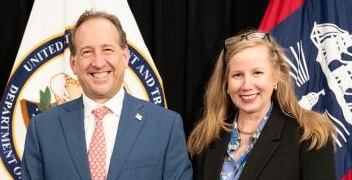
Soon after taking office, newly confirmed USPTO Director John Squires formally delegated his discretionary authority over inter partes review institution decisions to Deputy Director Coke Morgan Stewart on September 25, 2025. Just one day later, on September 26, the agency exercised that delegated authority to deny institution in fifteen IPR petitions covering eight patent groups. The denial decisions, though brief (each under two pages of text), reveal continued reliance on the expanded “Fintiv” framework that weighs parallel district court proceedings, while also emphasizing “settled expectations” based on patent age and petitioner delay. Notably, one decision denied institution even though the parallel district court case had been stayed, marking another expansion of discretionary denial grounds beyond trial timing concerns. L’Oréal USA, Inc. v. Brightex Bio-Photonics, LLC, IPR2025-00971. In general, I’m thinking of identifying this approach as Centralized Expanded Discretionary Denial or more simply, the Stewart Framework.
Why "Centralized Expanded Discretionary Denial"?

I refer to this as the "Centralized Expanded Discretionary Denial Framework" rather than "Fintiv" or its variants because the current practice has evolved far beyond the original trial-timing analysis. The framework now encompasses multiple independent grounds: parallel litigation timing (Fintiv+), parallel avoidance commitments (Sotera+), settled expectations, customer suits, roadmapping, equitable delay, and business relationships. "Centralized" reflects the 2025 shift from PTAB panel decisions to Director-level review, where the Director or Deputy Director personally exercises § 314(a) discretion rather than delegating these determinations to three-judge panels as was standard practice before 2025. "Expanded" or perhaps "Expansive" captures how denial grounds now extend well beyond timing to encompass equitable and strategic factors.
I expected that Director Squires would continue the discretionary denial approach that Stewart began several months ago. And, the delegation memo confirms ongoing business as usual. The new set of decisions show continued willingness to exercise discretionary authority across multiple scenarios: parallel district court litigation with unfavorable trial timing, customer suits where the petitioner is not directly accused, repeated challenges to the same claims after prior unsuccessful petitions, and cases involving long notice periods and business relationships between parties. (more…)
by Dennis Crouch
In Rideshare Displays, Inc. v. Lyft, Inc., No. 2023-2033 (Fed. Cir. Sept. 29, 2025) (nonprecedential), the Federal Circuit affirmed the PTAB determination that claims directed to vehicle identification systems for ridesharing services were unpatentable for obviousness, but reversed the Board’s grant of Rideshare’s motion to amend substitute claims. Judge Hughes, writing for the panel, held that the substitute claims were directed to patent-ineligible subject matter under 35 U.S.C. § 101 because they merely used technology as a tool to improve user experience rather than improving computer functionality itself.
The patents at issue all share a common specification directed to systems and methods for vehicle identification that allow ridesharing app users to verify they are getting in the correct cars and drivers to confirm they are picking up the correct riders. U.S. Patent Nos. 9,892,637; 10,169,987; 10,395,525; 10,559,199; and 10,748,417. The systems work by having a driver’s device receive a notification signal that triggers an indicator visible from outside the car, such as a code or icon on a display. Lyft filed five petitions for inter partes review in November 2021, and the Board found all challenged claims unpatentable as obvious or anticipated over the prior art. Rideshare moved to amend claims in two of the proceedings, and the Board allowed several substitute claims, prompting Lyft’s cross-appeal challenging the amendments on patent eligibility, written description, and obviousness grounds.
In its decision, the court compared the claimed system to “hand-printed cards with names to help identify ride pickups at crowded locations, such as an airport,” finding that invoking computers and mobile devices to streamline human interactions does not transform an abstract idea into patent-eligible subject matter.
USPTO's Limited Authority Over Substantive Patent Law

The USPTO lacks interpretive authority to construe substantive patent statutes including 35 U.S.C. §§ 101, 102, 103, and 112. The agency's internal guidance documents directing how patent examiners and even PTAB judges must apply these provisions receive no deference from reviewing courts. The Federal Circuit independently interprets these statutory provisions de novo, applying its own precedent rather than deferring to administrative interpretations. Here, for example, the court explicitly declined to follow the USPTO's 2019 eligibility guidance framework which I have previously noted tends toward being more pro-eligibility than court precedent.
 by Dennis Crouch
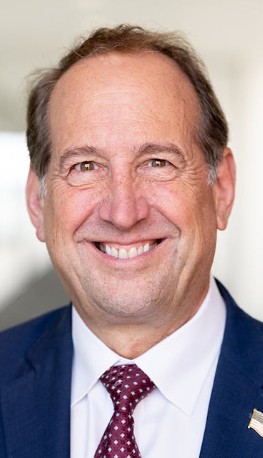
In a striking early display of directorial authority, newly sworn-in Under Secretary of Commerce and USPTO Director John Squires has vacated a Patent Trial and Appeal Board (PTAB) decision that had entered a new ground of rejection under 35 U.S.C. § 101 against DeepMind Technologies' machine learning patent application. The September 26, 2025 decision in Ex parte Desjardins, Appeal 2024-000567, Application 16/319,040, represents one of Director Squires' first substantive actions since taking office one week ago and offers yet another clear signal that Section 101 reform is building steam. SquiresPTABDecision.
Squires writes:
Categorically excluding AI innovations from patent protection in the United States jeopardizes America's leadership in this critical emerging technology. . . the panel essentially equated any machine learning with an unpatentable 'algorithm' and the remaining additional elements as 'generic computer components,' without adequate explanation. . . . most troubling [the Panel] eschewed the clear teachings of Enfish, and instead substituted only a cursory analysis that ignored this well-settled precedent. Panels should treat such precedent with more care, especially when acting sua sponte.
Finally, and most clearly a signal to all USPTO employees to back-off with regard to patent eligibility, he writes:
This case demonstrates that §§ 102, 103 and 112 are the traditional and appropriate tools to limit patent protection to its proper scope. These statutory provisions should be the focus of examination.
The application, filed by DeepMind (owned by Google) and prosecuted by Fish & Richardson, claims methods for training machine learning models on multiple sequential tasks while avoiding "catastrophic forgetting," which is defined as the phenomenon where neural networks lose knowledge of previous tasks when trained on new ones. As someone with some ADHD tendencies, I recognizing this issue.