Supreme Court’s January 2026 IP Docket: Hikma Leads a Small but Significant Field

by Dennis Crouch

Things look pretty thin. The Supreme Court has not granted certiorari in any patent cases this term and only four are still pending before the Court. But the ones that are pending include some important questions. Of the four, one stands out as the most likely candidate for certiorari: Hikma Pharmaceuticals v. Amarin Pharma, a Hatch-Waxman induced infringement case that received a supportive call-for-the-views-of-the-Solicitor-General (CVSG) response. The January 9, 2026 conference also includes one other patent cases along with one trademark dispute. A two additional patent cases remain in briefing: Lynk Labs v. Samsung and Agilent v. Synthego.

To continue reading, become a Patently-O member. Already a member? Simply log in to access the full post.

PTAB Doubles Section 101 Reversal Rate Under Director Squires

by Dennis Crouch

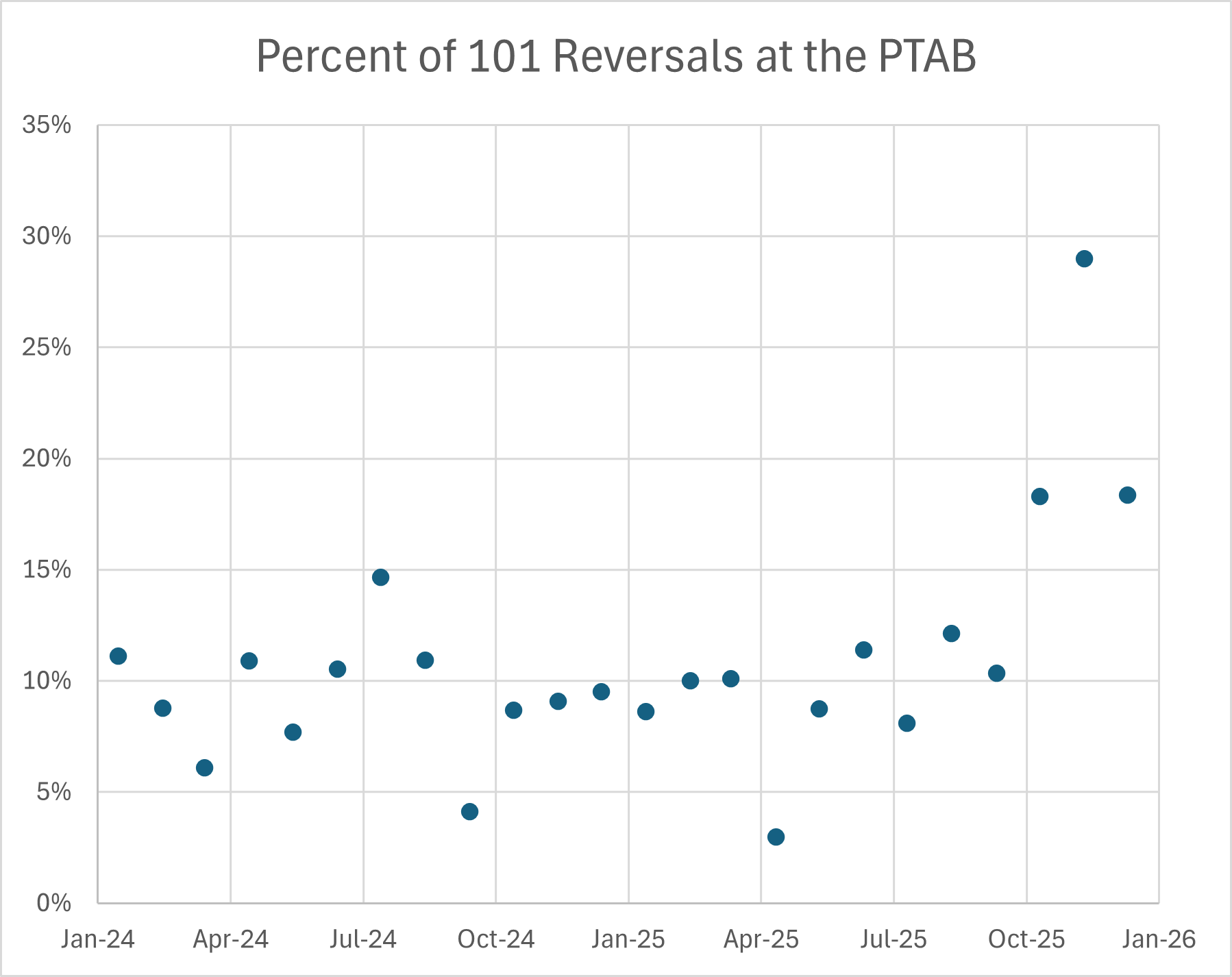
The Patent Trial and Appeal Board (PTAB) has doubled its rate of reversing Section 101 rejections since Director John Squires took office, according to my new analysis of ex parte appeal decisions involving eligibility challenges from 2024 and 2025.  The reversal rate, which hovered between 8% and 12% for most of 2024 and early 2025, jumped to 18% in October 2025 and spiked to 29% in November. A recent rehearing decision in Ex parte Mercer, Appeal 2024-002371 (PTAB Oct. 31, 2025), illustrates one aspect of the Board's new approach: demanding evidentiary support for findings that claimed elements are "well-understood, routine, conventional activity" under Alice step two.

The chart above shows the percentage of Section 101 rejections reversed by the Board (without a new ground of rejection) in ex parte appeals, by month.  As I discussed in October, the Board's Section 101 reversal rate began climbing shortly after Director Squires took office. Dennis Crouch, PTAB Responds to New Director with Increased § 101 Reversals, Patently-O (Oct. 2025). The trend has accelerated. The November 2025 reversal rate of 29% represents nearly a threefold increase from the rates that prevailed through most of 2024.


To continue reading, become a Patently-O member. Already a member? Simply log in to access the full post.

Patents as Product Liability Admissions: A Cert Petition Highlights Novel Use of Patent Filings in Whistleblower Case

by Dennis Crouch

A fascinating cert petition filed last week (Peterson v. Minerva Surgical) uses Minerva’s patents in an innovative way — attempting to use the company’s patent filings as evidence of prior knowledge of product safety issues. The petition, filed by former Minerva Surgical area sales director Dan Peterson, argues that the company’s patent application for an improved surgical device directly contradicted testimony it later gave in whistleblower retaliation arbitration proceedings.

According to the petition, in January 2017, Minerva filed Patent Application No. 15/418,635 seeking protection for a modified endometrial ablation device. The application disclosed that the original design had a defect that could “plug” uterine perforations, potentially leading to serious patient injuries. The USPTO ultimately granted the patent (No. 10,213,151) in February 2019, with claims explicitly discussing how the new design solved these safety issues. (more…)

Federal Circuit Internal Debate over Reversal versus Vacatur

by Dennis Crouch

Yesterday, the Federal Circuit issued a divided opinion in Honeywell International Inc. v. 3G Licensing, S.A., No. 2023-1354 (Fed. Cir. Jan. 2, 2025), highlighting key disagreements about the proper role of appellate courts in reviewing Patent Trial and Appeal Board (PTAB) decisions.  The case appears to also foreshadow an internal fight over the exclusion of expert testimony that is currently pending en banc in EcoFactor v. Google.

The case centers on the validity of a patent related to encoding data in cellular communications, specifically focusing on methods for protecting important data bits from transmission errors.  Patent No. 7,319,718.  Writing for the majority, Judge Dyk reversed the PTAB's holding that the claims were not proven obvious. Judge Stoll write in dissent, arguing the majority improperly stepped into the role of fact-finder rather than acting as an appellate tribunal.  To be clear, Judge Stoll was no fan of the PTAB's opinion, but would have vacated and remanded for further factual development on the question of obviousness rather than entirely flipping the decision via reversal.


To continue reading, become a Patently-O member. Already a member? Simply log in to access the full post.

Supreme Court Preview: Will “Skinny Labels” Get a Weight Check?

by Dennis Crouch

The Supreme Court will soon be asked to weigh in on the the skinny-label debate -- particularly the question of how much a generic drug manufacturers can say about their products without inducing patent infringement? The case is Hikma v. Amarin.

It is very common for a drug to follow the following innovation-patent pathway:

  1. First the composition is discovered and patented along with a particular therapeutic use.
  2. Later a more effective treatment regimen is discovered and patented.

Once the first set of patents expire, generic manufactures should be permitted to begin marketing the drug -- except for uses still patented.  But, this gets tricky.  We know that there will be a very $trong incentive for insurance companies, doctors, and patients to use the cheaper generic drug for the still-patented treatment regime.  The question is whether the generic manufacture can be blamed for inducing this infringement.


To continue reading, become a Patently-O member. Already a member? Simply log in to access the full post.

Federal Funded Innovation and March-In Rights

by Dennis Crouch

The Biden Administration is seeking comment on its proposed framework for how how agencies should evaluate exercising “march-in rights” over federally funded inventions. For those familiar with march-in rights, this guidance has been a long time coming. While these powers have technically existed for years under the Bayh-Dole Act, the lack of clear procedures around their use has rendered them largely theoretical. This proposal could change that.


To continue reading, become a Patently-O member. Already a member? Simply log in to access the full post.

Sharon Israel, PTO New Chief Policy Officer

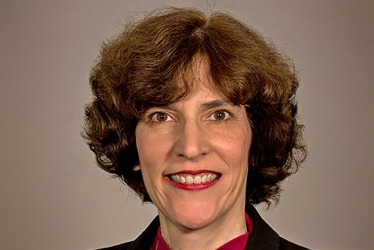
Congratulations to Sharon Israel on her new leadership role at the USPTO.  I was happy to learn that Director Vidal has appointed Sharon Israel as its new Chief Policy Officer and Director for International Affairs. Ms. Israel has been a leader of the patent bar for many yeas and will bring tremendous expertise to this important role overseeing the USPTO's policy and international programs.  For the past few years, she has been a partner at Shook Hardy focusing on patent litigation -- primarily on the defense side.



To continue reading, become a Patently-O member. Already a member? Simply log in to access the full post.

Plagiarism Police come for Winston & Strawn

Hsuanyeh Law Group v. Winston & Strawn, 23-cv-11193 (S.D.N.Y. 2024)

A recent copyright infringement lawsuit filed by small Boston intellectual property boutique Hsuanyeh Law Group PC (HLG) against international giant Winston & Strawn LLP focuses a dividing line that can highlight when copying the work of another firm is permissible.  I believe that Winston & Strawn will eventually prevail based upon a fair use defense, but it is still an embarrassing situation for the firm and attorneys involved.  I hope that they did not overbill the client.  The role of attribution is also receiving increasing focus as attorneys begin to rely more heavily on AI outputs for their legal documents.


To continue reading, become a Patently-O member. Already a member? Simply log in to access the full post.

Federal Circuit Affirms Invalidity of Genus Claims to Stevia Production Method Lacking Written Description and Narrower Claims as Combining Natural Phenomena with an Abstract Idea

by Dennis Crouch

In PureCircle USA Inc. v. SweeGen, Inc., No. 22-1946 (Fed. Cir. Jan. 2, 2024) (non-precedential) [PureCircle Decision], the Federal Circuit affirmed a district court summary judgment siding against the patentee, PureCircle.  The court concluded that the stevia production method claims were all invalid, either for: (1) lack of written description for the genus claim or (2) lack of eligibility because the claims are directed to a natural phenomenon combined with an abstract idea.  Judge Dyk authored the opinion of the court that was joined by Judges Schall and Stark affirming the ruling of C.D.Cal Judge James Selna.

The written description portion of the opinion parallels the Supreme Court's 2023 Amgen decision that focused on the sibling doctrine of enablement. Although non-precedential, the eligibility portion appears important because of the way it combines prohibited eligibility categories and rules that method claims requiring a particular purity level are themselves an abstract idea absent requirement of specific steps on how that purity level is achieved.


To continue reading, become a Patently-O member. Already a member? Simply log in to access the full post.

The First Precedential Patent Decision of 2024: Dexcom v. Abbott Diabetes Care

by Dennis Crouch

The U.S. Court of Appeals for the Federal Circuit has begun 2024 [2023] with its first precedential patent decision in DexCom, Inc. v. Abbott Diabetes Care, Inc., 2023-1795 (Fed. Cir. January 3, 2024).  In an opinion by Judge Stoll, the court affirmed a district court decision denying DexCom’s motion for a preliminary injunction. The patentee had requested an order barring Abbott from pursuing its IPR challenges - based upon a forum selection clause that was part of a prior settlement between the parties. Judges Dyk and Hughes were also on the panel.


To continue reading, become a Patently-O member. Already a member? Simply log in to access the full post.

Patent Law Exam 2023: Are you Smarter than a Law Student?

by Dennis Crouch

The following is my patent law exam from this past semester. As in years past, the exam was worth less than half of the final grade because the students did other substantial work during the semester, including a major moot court competition.   Students were permitted access to their book/notes/internet, but were barred communications with another human during the exam.

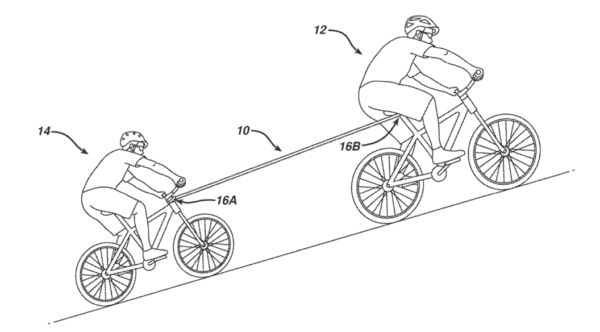
This year's exam is very loosely based upon an interesting patent that I found associated with the Tow Whee product created by Eric Landis.  See US11167164, US11731470, and US11724148.  But, the events described are entirely my creation.

= = =


To continue reading, become a Patently-O member. Already a member? Simply log in to access the full post.